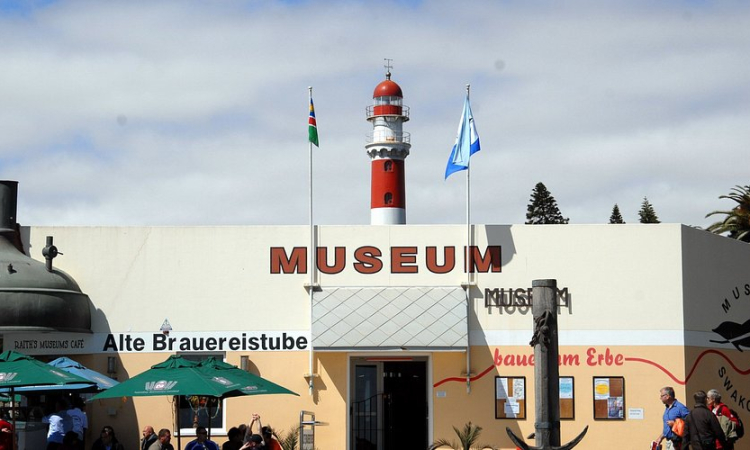
The Swakopmund Museum has the best collection of Namibian history and nature in the country. It started small in 1951 and now fills a whole building near the lighthouse. This is not a government museum. Local people and donations keep it running.
What You See Inside
The mineral room has stones and gems from Namibian mines. You see what comes out of the ground here. Some rocks glow under special lights. Kids like this part. The fossil section shows old sea creatures that lived here millions of years ago when this desert was underwater.
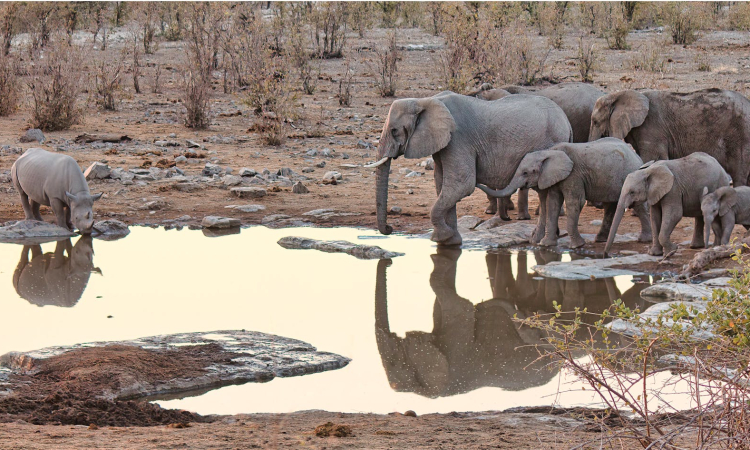
One room has a complete elephant skeleton. This shows how desert elephants are smaller than regular elephants. Their feet are different too for walking on sand.
Culture Rooms
Traditional clothing from Herero, Nama, Damara, and Ovambo people fill glass cases. You see the real items they used every day, not copies. Old photos show how people lived 100 years ago. The photos are interesting because you see the same streets you just walked on.
Tools, weapons, and cooking pots show daily life before Europeans came. Each item has a label explaining what it was used for. The Herero dress display shows why their Victorian style dresses look the way they do.
German History Section
German colonial items include uniforms, guns, and documents. Old maps show how small Swakopmund was in 1900. Furniture from German homes sits in recreated room settings. You see how settler families decorated their houses.
Letters and official papers tell stories about daily problems like getting fresh water and dealing with the desert heat. This makes history feel real, not just dates and names.
Ocean Life
The marine section shows fish and crabs from the Atlantic. Everything is preserved in jars or tanks. Labels explain why cold water here has different fish than warm water up north. A big display shows how the Benguela Current affects everything.
Desert animals are here too. You see how beetles collect water from fog. Plants like welwitschia can live for over 1,000 years. Real examples sit behind glass so you can see their strange shapes up close.
Visiting Details
Open Monday to Saturday, 10am to 5pm. Closed at Sundays. Entry costs about 60 Namibian dollars for adults, less for kids. Students get discounts with ID cards. You can walk through at your own speed or book a guide for your group.
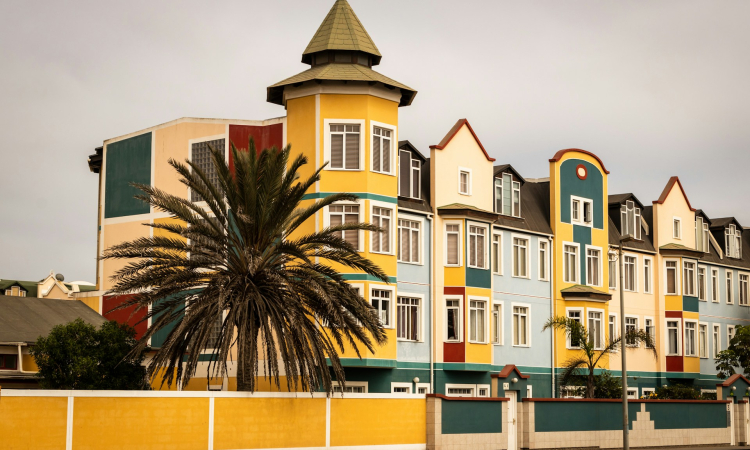
The building itself is old with wooden floors that creak. High ceilings keep it cool. It takes about 90 minutes to see everything. A small shop sells postcards and books about Namibia.
After the museum, walk to the Swakopmund Lighthouse next. You can see it from the museum door. Both spots together make a good morning of sightseeing in the old part of town.